Donated to Vivent Health for the Paul Kirby Fund to enhance the health and well-being of the community and people affected by HIV and AIDS.
Donated to Vivent Health for the Paul Kirby Fund to enhance the health and well-being of the community and people affected by HIV and AIDS.
By Becky Jensen for Pigment & Prose
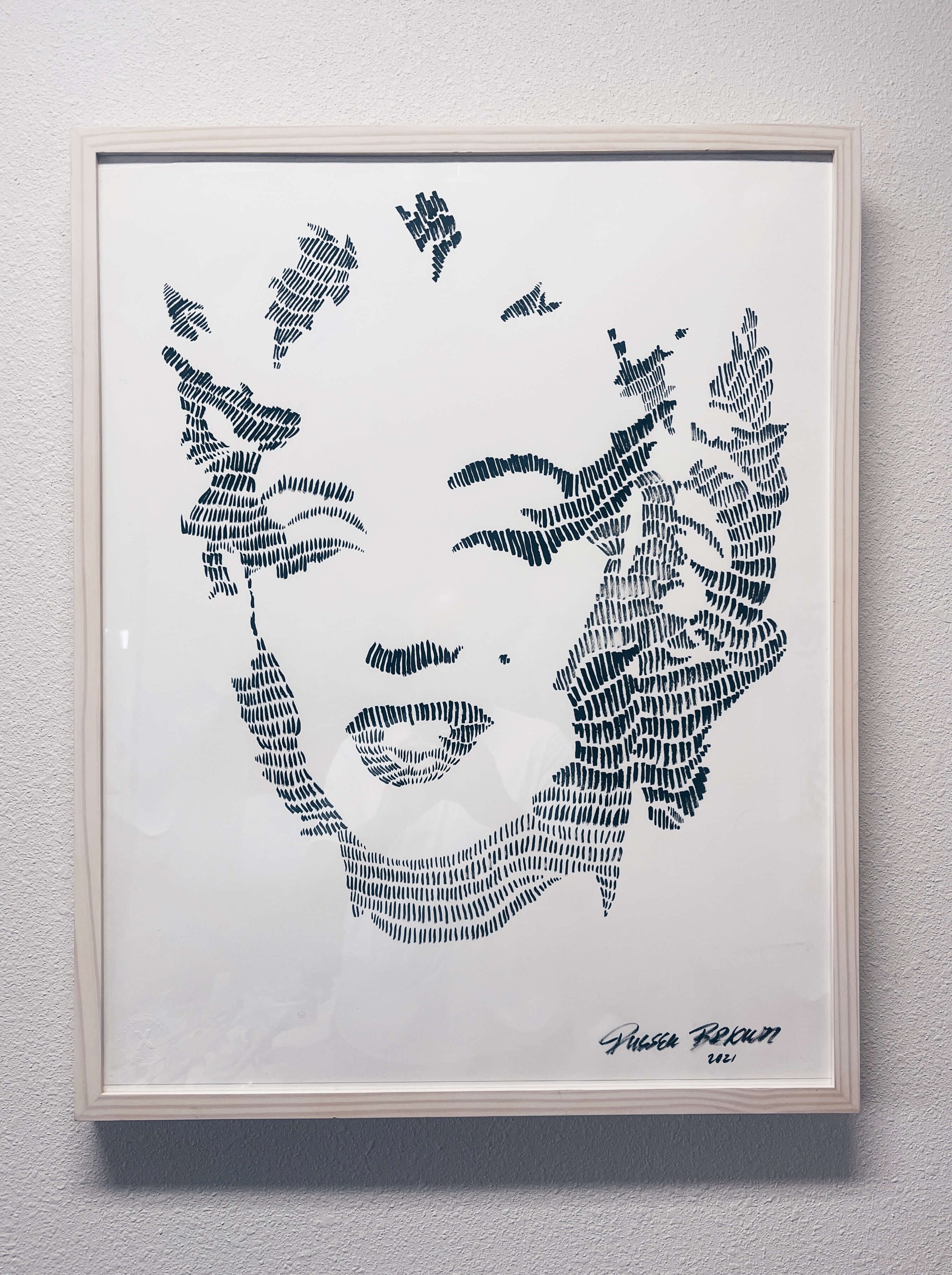
In the frenetic ecosystem of contemporary art, where canvases are snapped up by collectors with the fervor of stock traders, Russell Brxwn stands as an enigmatic outlier, a painter whose work is as impossible to purchase as it is unforgettable to behold. At 41, this Austin-based artist has crafted a body of paintings that vibrate with the raw energy of pop culture and the serene discipline of meditative abstraction. Yet Brxwn’s true singularity lies not in his aesthetic but in his defiance of the market’s gravitational pull: he does not sell his original works. Not to billionaire patrons, not to blue-chip galleries, not to the most silver-tongued dealer. Instead, he donates his paintings to auctions for causes he holds dear—climate advocacy, youth arts programs, community resilience and gifts them to friends, fellow artists, and those who share his love for the arts. To own a Brxwn is to be anointed, not by wealth, but by proximity to his vision, a privilege that has made his work the art world’s most exquisite white whale.
Brxwn’s paintings are visual symphonies, built on what he calls “patterning lines” spontaneous, sinuous marks that cascade across his canvases like calligraphy unbound. These lines are both method and mantra, a way, he says, to “silence the overthinking mind and let the hand breathe.” In their fluidity, they evoke the gestural abandon of Cy Twombly or the rhythmic precision of Agnes Martin, yet their context is unmistakably contemporary. Brxwn weaves these lines through fragmented pop culture motifs abstract logos, graffiti scrawls, and the pixelated detritus of digital life, creating compositions that feel like snapshots of a city’s pulse.
To stand before a Brxwn painting is to feel caught in a paradox: the work is both a mirror of the viewer’s world and a window into the artist’s soul. His larger pieces, often stretching 10 feet or more, seem to pulse with life, their lines dancing in hypnotic rhythms that invite prolonged looking. Smaller works, no less potent, carry the intensity of a whispered confession. Yet for all their visual power, these paintings are not commodities. Brxwn’s refusal to sell is not a stunt but a philosophy, rooted in a conviction that art’s value lies in its ability to connect and uplift, not in its market price. “Paintings aren’t trophies,” he’s been quoted as saying, with the kind of disarming candor that makes you want to buy him a coffee and debate aesthetics till dawn. “They’re for sharing, for moving people, for changing things.”
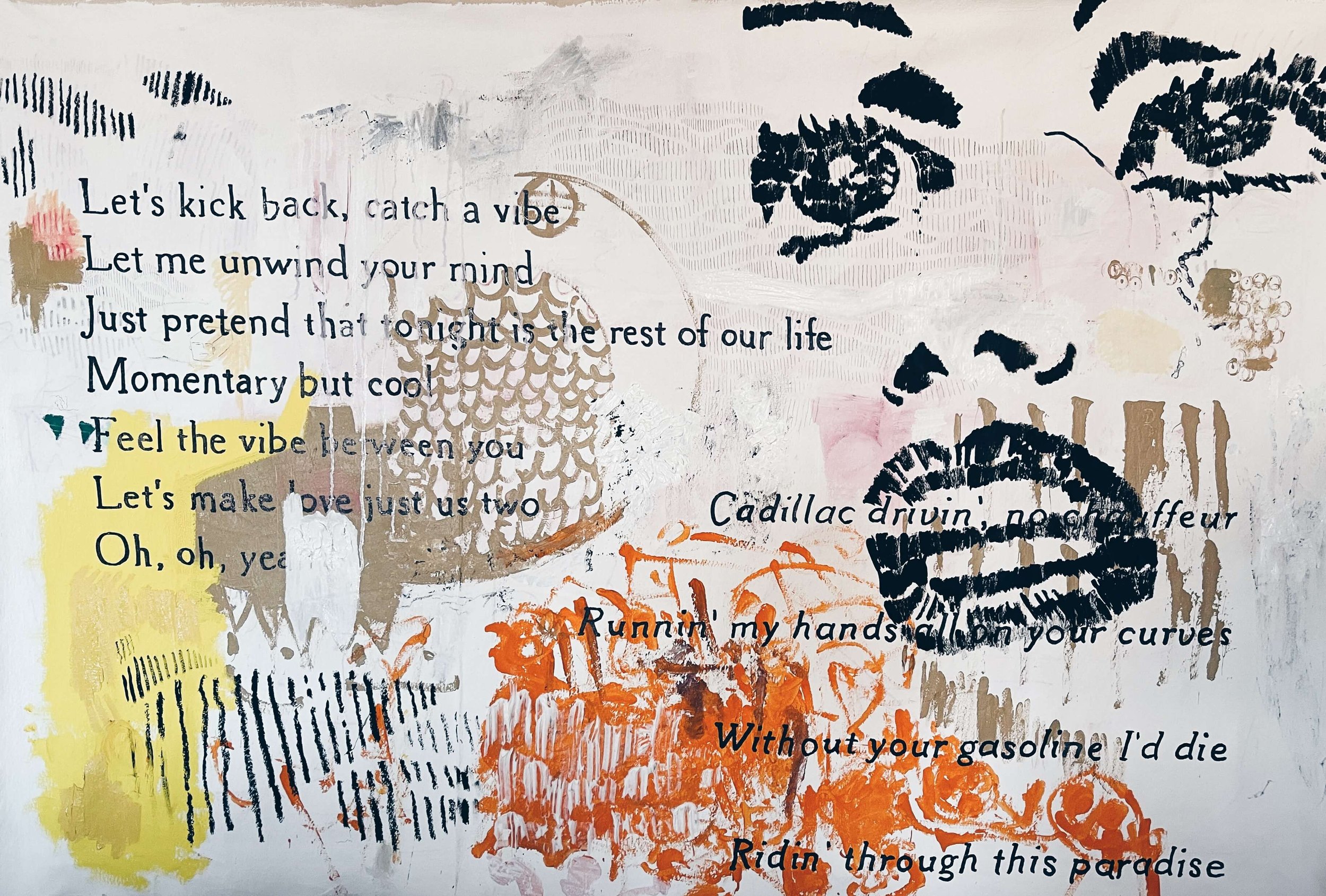
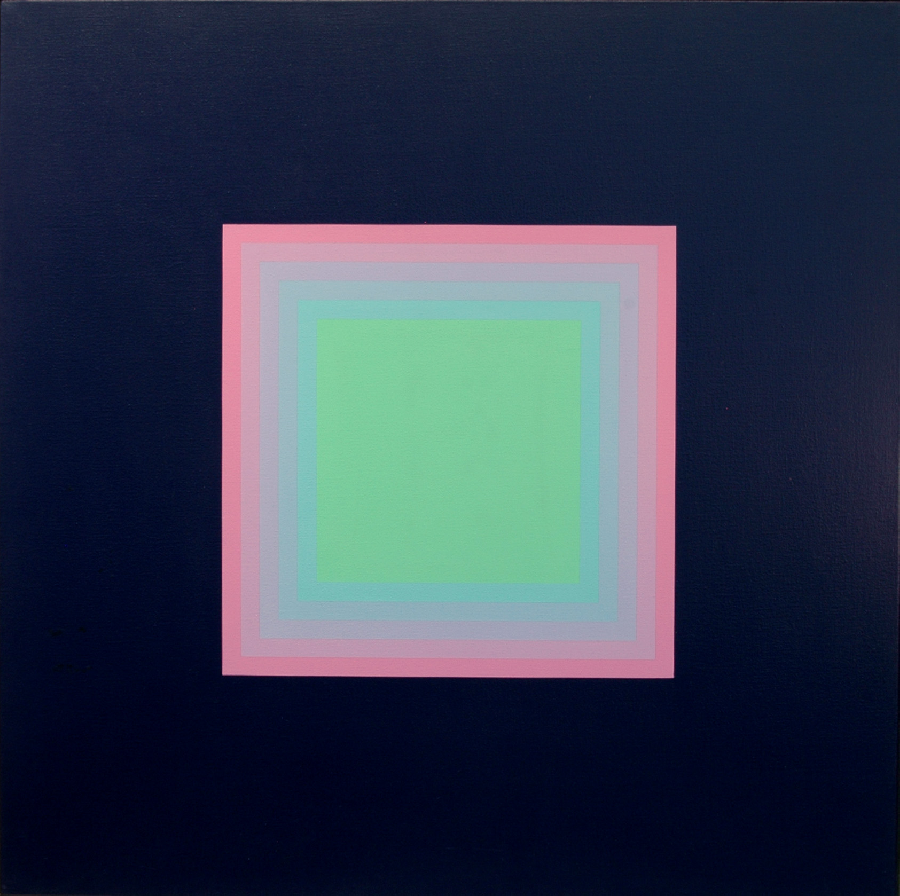
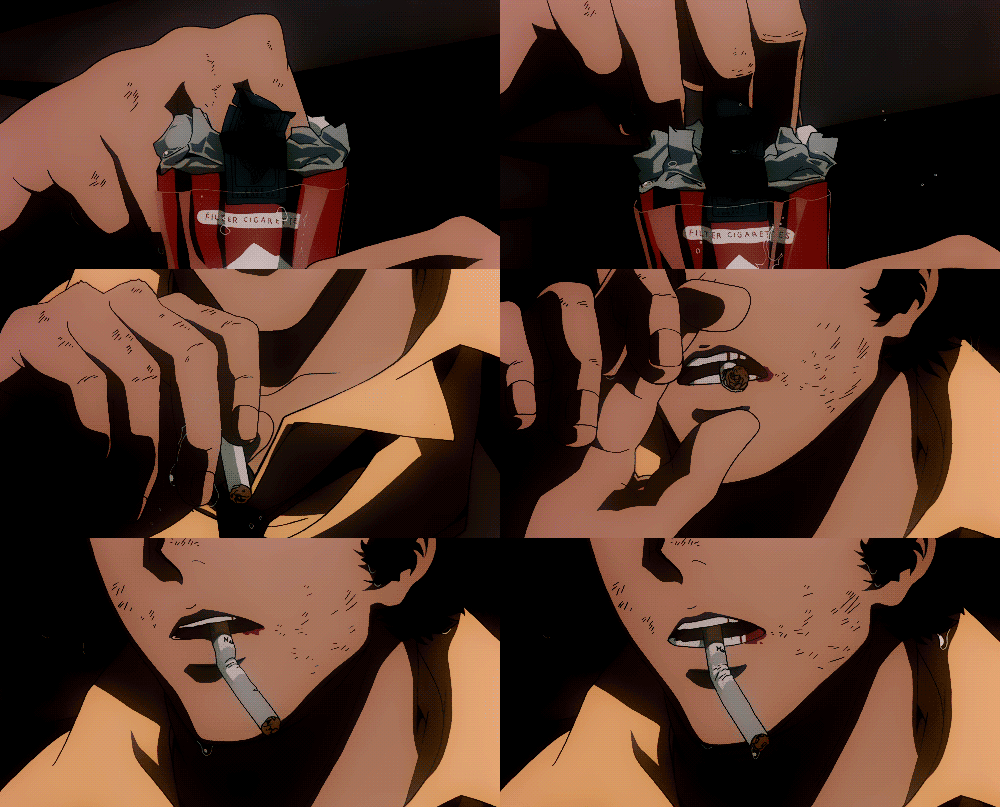
“Cadillac Drive, 2024”
This ethos manifests most vividly in the auctions where Brxwn’s works occasionally surface, always tethered to causes that reflect his social and environmental commitments. Picture a bustling charity gala, the room abuzz with philanthropists and art-world insiders, when a Brxwn canvas is unveiled—a riot of cobalt lines swirling around a fractured, almost recognizable pop icon. The bidding erupts, not just for the painting’s beauty but for what it represents: a chance to support a youth arts initiative in Austin, a conservation effort in the Texas Hill Country, or a community center rebuilding after a storm. The sums fetched are staggering, yet Brxwn remains aloof from the frenzy, his focus fixed on the impact rather than the dollars. These moments are less transactions than rituals, cementing his paintings as objects of both desire and purpose.
Equally compelling are the stories of those who receive Brxwn’s gifts. A fellow artist might find a small canvas left unceremoniously at their studio, wrapped in butcher paper with a scrawled note: “Thought you’d get this.” A curator who championed his early work might open their door to a painting that captures the exact hue of a shared memory. An art lover who struck up a conversation at a dive bar might, months later, receive a work that feels like a continuation of that fleeting encounter. These gifts are not random but deliberate, bestowed on those who, in Brxwn’s estimation, understand art’s deeper currency. To be gifted a Brxwn is to be seen, to be invited into a quiet conspiracy of meaning-making. One recipient, a poet who met Brxwn at a late-night Austin open mic, described the experience as “like being handed a piece of his heartbeat, no strings attached.”
This refusal to commodify his work, places Brxwn in a rare lineage of artists who challenge the art world’s capitalist underpinnings—think of Marcel Duchamp’s subversive readymades or Banksy’s shredded auction stunt, though Brxwn’s approach is less confrontational than communal. His paintings, scattered across auction halls and the private walls of his chosen kin, are like rare manuscripts, their value amplified by their scarcity and the stories they carry. In an age when NFTs and seven-figure sales dominate headlines, Brxwn’s practice feels like a quiet revolution, a reminder that art can still be a gift, a gesture, and a catalyst for change.
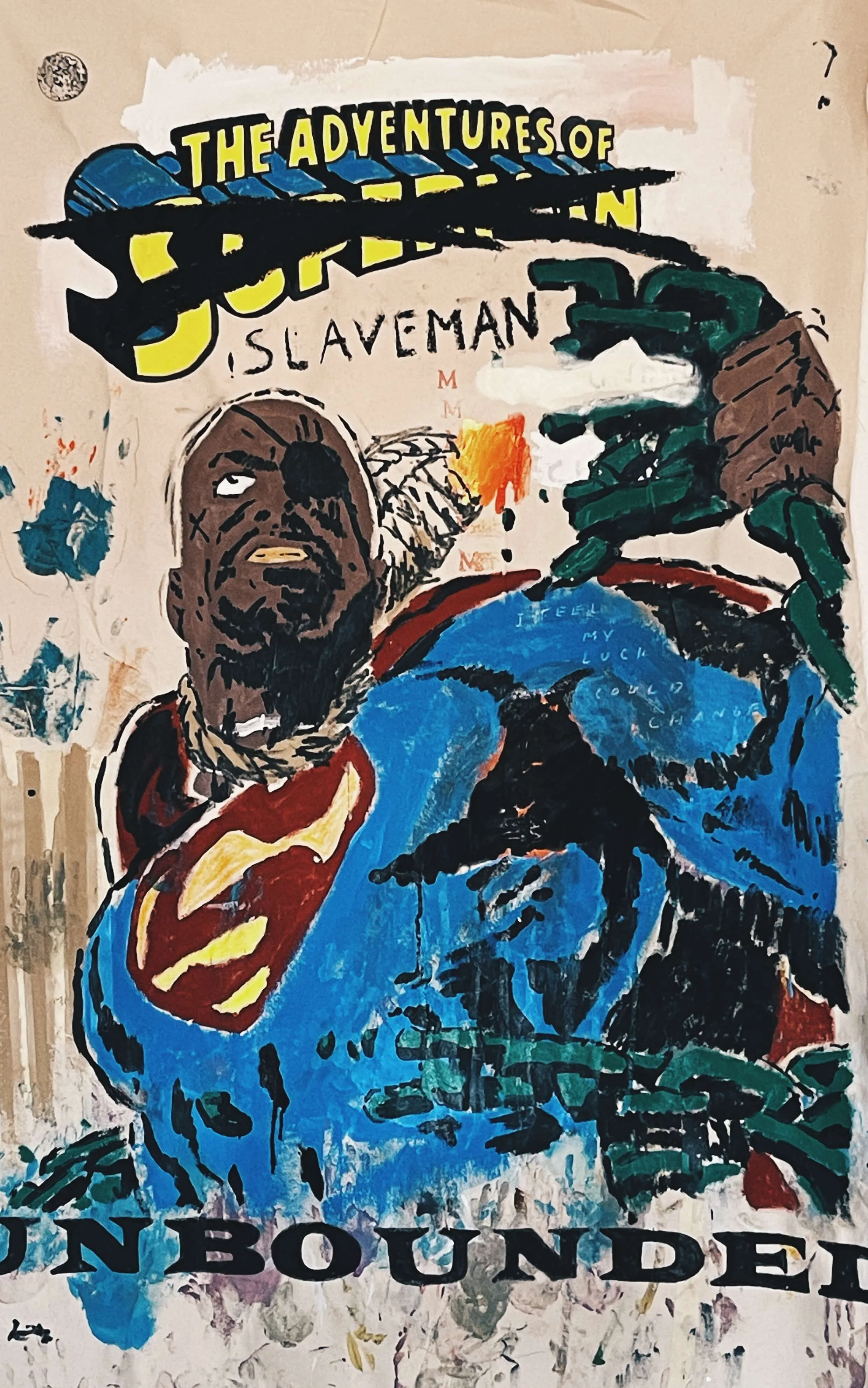
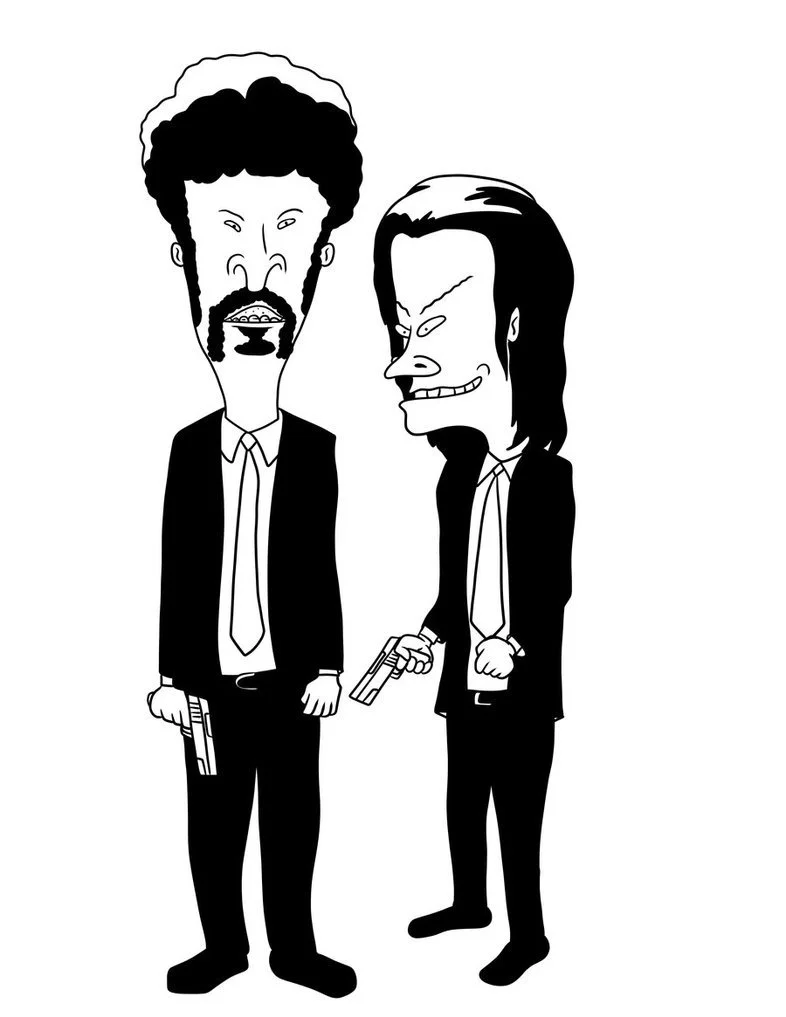
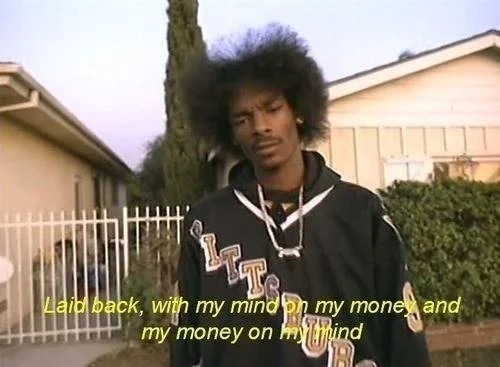
"Adventures of Slaveman. 2024”
Yet there’s no sanctimony in Brxwn’s stance, no trace of the ascetic martyr. He’s as likely to be found sketching in an Austin taqueria, trading quips with strangers, as he is to be pondering the metaphysics of line in his studio. His work draws heavily on the city’s eclectic energy—its street art, its music scene, its blend of grit and idealism—infusing his paintings with a warmth that tempers their cerebral edge. He’s a magpie of pop culture, plucking references from vintage album covers, comic book panels, and the glitchy aesthetics of early internet memes, then reweaving them into something that feels both nostalgic and prophetic. A Brxwn painting might remind you of the first time you saw a Keith Haring mural or the last time you scrolled through a feed at 2 a.m., yet it never feels derivative. It’s as if he’s distilled the noise of the world into a single, resonant note.
The art world, of course, is not immune to the irony of Brxwn’s inaccessibility. Collectors whisper about him in the hushed tones reserved for urban legends, trading rumors of who might have snagged one of his works at a recent auction or through a stroke of personal luck. Gallerists, ever hopeful, float proposals for shows that might coax him into the market, only to be met with a polite but firm demurral. Critics, meanwhile, grapple with how to evaluate an artist whose output resists traditional metrics of success. Is Brxwn a visionary or a provocateur? A saint or a strategist? The truth, as always, lies in the work itself—paintings that demand to be experienced, not owned, and that linger in the mind like a melody you can’t quite place.
For now, Brxwn remains in Austin, painting with the same restless curiosity that has defined his career. His studio, by all accounts, is a chaos of half-finished canvases, vinyl records, and dog-eared books on everything from Buddhist philosophy to streetwear history. He’s at work on a new series, though he’s characteristically coy about its details, hinting only that it involves “lines that move like water.” Whether these paintings will end up in a charity auction, a friend’s living room, or some other unexpected corner of the world is anyone’s guess. What’s certain is that they’ll carry the same alchemy that defines all of Brxwn’s work: a blend of heart, hustle, and a stubborn belief that art can still change the rules of the game.
As I write this, I can’t help but imagine stumbling across a Brxwn painting someday, perhaps in a community center or on the wall of a friend who earned his trust over late-night tacos. It would be a moment of recognition, a reminder that the best art isn’t the kind you buy but the kind that finds you. In a world obsessed with possession, Russell Brxwn is painting a different kind of legacy one line, one gift, one cause at a time.
BY TIM NEWCOMB NOV 9, 2023
Maybe even sooner. Are you ready?
“The singularity,” the moment where AI is no longer under human control, is less than a decade away—according to one AI expert.
More resources than ever are being poured into the pursuit of artificial general intelligence and speeding the growth of AI.
Development of AI is also coming from a variety of sectors, pushing the technology forward faster than ever before.
There’s at least one expert who believes that “the singularity”—the moment when artificial intelligence surpasses the control of humans—could be just a few years away. That’s a lot shorter than current predictions regarding the timeline of AI dominance, especially considering that AI dominance is not exactly guaranteed in the first place.
MORE FROM POPULAR MECHANICS ON APPLE NEWS
A Chinese Dissident Jet-Skied 186 Miles to Asylum. We Calculated How Much Fuel It Took to Pull Off
Ben Goertzel, CEO of SingularityNET—who holds a Ph.D. from Temple University and has worked as a leader of Humanity+ and the Artificial General Intelligence Society—told Decrypt that he believes artificial general intelligence (AGI) is three to eight years away. AGI is the term for AI that can truly perform tasks just as well has humans, and it’s a prerequisite for the singularity soon following.
Whether you believe him or not, there’s no sign of the AI push slowing down any time soon. Large language models from the likes of Meta and OpenAI, along with the AGI focus of Elon Musk’s xAI, are all pushing hard towards growing AI.
FOLLOW
POPULAR
MECHANICS
“These systems have greatly increased the enthusiasm of the world for AGI,” Goertzel told Decrypt, “so you’ll have more resources, both money and just human energy—more smart young people want to plunge into work and working on AGI.”
When the concept of AI started first emerged—as early as the 1950s—Goertzel says that its development was driven by the United States military and seen primarily as a potential national defense tool. Recently, however, progress in the field has been propelled by a variety of drivers with a variety of motives. “Now the ‘why’ is making money for companies,” he says, “but also interestingly, for artists or musicians, it gives you cool tools to play with.”
Getting to the singularity, though, will require a significant leap from the current point of AI development. While today’s AI typically focuses on specific tasks, the push towards AGI is intended to give the technology a more human-like understanding of the world and open up its abilities. As AI continues to broaden its understanding, it steadily moves closer to AGI—which some say is just one step away from the singularity.
The technology isn’t there yet, and some experts caution we are truly a lot further from it than we think—if we get there at all. But the quest is underway regardless. Musk, for example, created xAI in the summer of 2023 and just recently launched the chatbot Grok to “assist humanity in its quest for understanding and knowledge,” according to Reuters. Musk also called AI “the most disruptive force in history.”
With many of the most influential tech giants—Google, Meta and Musk—pursuing the advancement of AI, the rise of AGI may be closer than it appears. Only time will tell if we will get there, and if the singularity will follow.
More from Popular Mechanics
The Scientist Who Wants to Show You How to Live for a Really, Really Long Time
Massive 747s Ruled the Skies—And Then One Crashed Into a Mountain
Is Death Real? New Experiments Raise Important Questions About What It Means to Die.
Need to know the biggest scientific breakthroughs in our galaxy?
Get our newsletter for more fascinating insights.
MORE FROM POPULAR MECHANICS ON APPLE NEWS
The Secret Reason Why Ancient Roman Concrete Is So Remarkably Strong
https://apple.news/AE1NLg4qITxG486VASh5NtA
In the realm of art history, some stories emerge that are as intriguing as they are controversial. One such tale revolves around the alleged conspiracy between the CIA and the renowned American artist Jackson Pollock. This unusual partnership, if true, raises questions about the intersection of art, espionage, and political intrigue during the Cold War era. In this blog post, we will explore the claims, evidence, and theories surrounding the CIA's connection to the abstract expressionist artist Jackson Pollock.
Before delving into the conspiracy, it's important to understand the artist at the center of the controversy: Jackson Pollock. Pollock was a prominent figure in the abstract expressionist movement, known for his revolutionary drip painting technique. His art challenged traditional boundaries and played a pivotal role in shaping the trajectory of modern art in the mid-20th century.
The Cold War was a period of ideological conflict between the United States and the Soviet Union, characterized by espionage, propaganda, and intense competition on various fronts. This context provides the backdrop for the alleged CIA-Pollock connection.
Some researchers claim that the CIA saw the power of abstract expressionism as a means of promoting American culture during the Cold War. Abstract art, with its ambiguity and lack of direct political messaging, was seen as a way to showcase American freedom and creativity in contrast to the perceived conformity of Soviet art.
In recent years, declassified documents have shed light on the CIA's involvement in promoting abstract expressionism. The CIA's Congress for Cultural Freedom, an organization created to counter communist influence in the arts, funded exhibitions of American abstract artists, including Pollock, in Europe. Some critics argue that these exhibitions served as a form of cultural propaganda.
The alleged CIA-Pollock connection has been met with skepticism by some art historians. They argue that the CIA's interest in abstract expressionism was part of a broader effort to promote American culture, and the connection between Pollock and espionage remains speculative at best.
Regardless of the conspiracy, Jackson Pollock's legacy in the art world remains intact. His influence on modern art and the development of abstract expressionism is undeniable, and his contributions continue to be celebrated worldwide.
The alleged conspiracy between the CIA and Jackson Pollock is a fascinating and controversial topic that blurs the lines between art, politics, and espionage. While some evidence suggests the CIA had an interest in promoting abstract expressionism during the Cold War, the true extent of their connection to Pollock remains a matter of debate. Whether or not there was a covert partnership, Jackson Pollock's impact on the art world remains undeniably profound, and his work continues to captivate and inspire artists and art enthusiasts to this day.