The Elusive Alchemy of Russell Brxwn

The Elusive Alchemy of Russell Brxwn

By Becky Jensen for Pigment & Prose

In the frenetic ecosystem of contemporary art, where canvases are snapped up by collectors with the fervor of stock traders, Russell Brxwn stands as an enigmatic outlier, a painter whose work is as impossible to purchase as it is unforgettable to behold. At 41, this Austin-based artist has crafted a body of paintings that vibrate with the raw energy of pop culture and the serene discipline of meditative abstraction. Yet Brxwn’s true singularity lies not in his aesthetic but in his defiance of the market’s gravitational pull: he does not sell his original works. Not to billionaire patrons, not to blue-chip galleries, not to the most silver-tongued dealer. Instead, he donates his paintings to auctions for causes he holds dear—climate advocacy, youth arts programs, community resilience and gifts them to friends, fellow artists, and those who share his love for the arts. To own a Brxwn is to be anointed, not by wealth, but by proximity to his vision, a privilege that has made his work the art world’s most exquisite white whale.

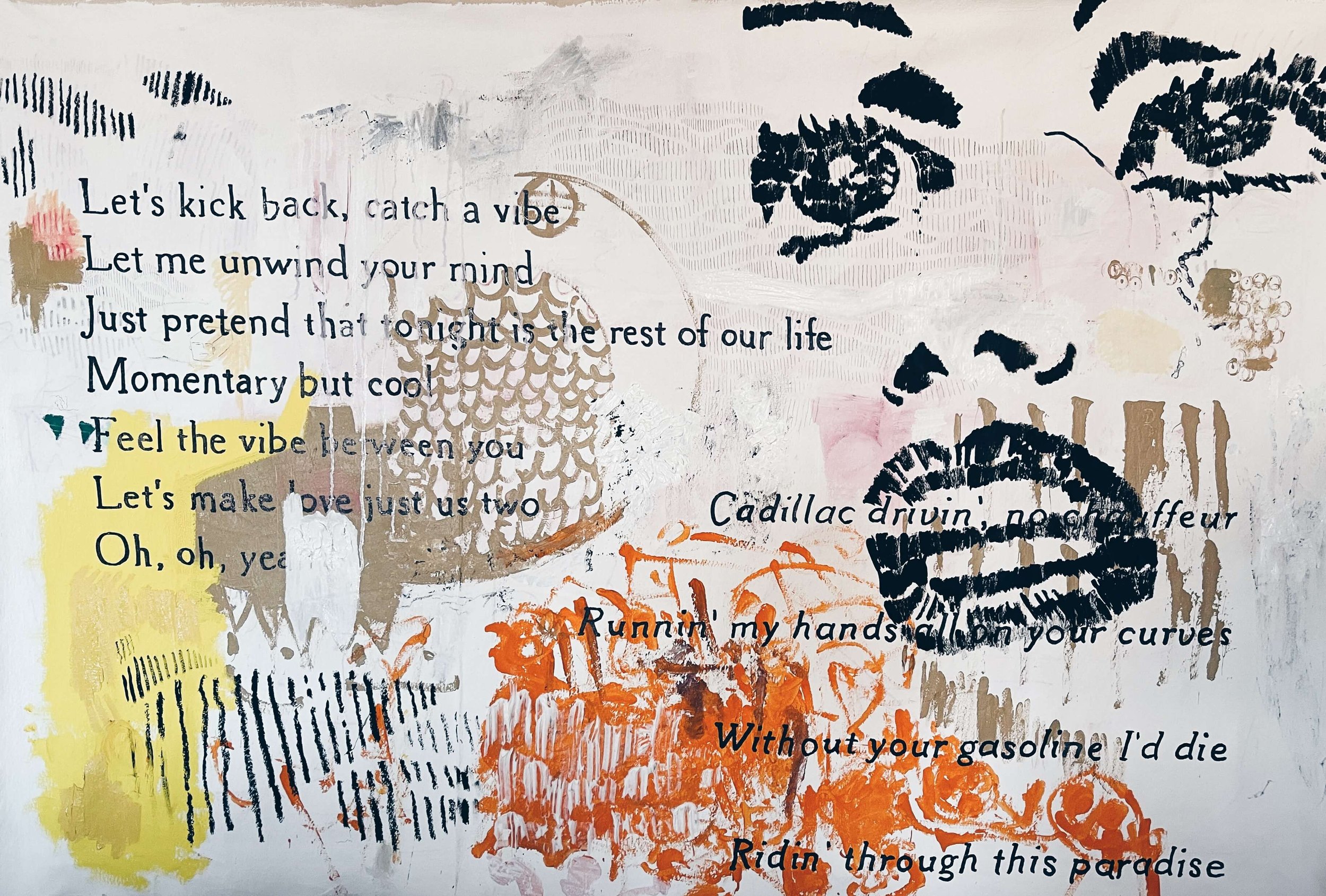
Brxwn’s paintings are visual symphonies, built on what he calls “patterning lines” spontaneous, sinuous marks that cascade across his canvases like calligraphy unbound. These lines are both method and mantra, a way, he says, to “silence the overthinking mind and let the hand breathe.” In their fluidity, they evoke the gestural abandon of Cy Twombly or the rhythmic precision of Agnes Martin, yet their context is unmistakably contemporary. Brxwn weaves these lines through fragmented pop culture motifs abstract logos, graffiti scrawls, and the pixelated detritus of digital life, creating compositions that feel like snapshots of a city’s pulse.

To stand before a Brxwn painting is to feel caught in a paradox: the work is both a mirror of the viewer’s world and a window into the artist’s soul. His larger pieces, often stretching 10 feet or more, seem to pulse with life, their lines dancing in hypnotic rhythms that invite prolonged looking. Smaller works, no less potent, carry the intensity of a whispered confession. Yet for all their visual power, these paintings are not commodities. Brxwn’s refusal to sell is not a stunt but a philosophy, rooted in a conviction that art’s value lies in its ability to connect and uplift, not in its market price. “Paintings aren’t trophies,” he’s been quoted as saying, with the kind of disarming candor that makes you want to buy him a coffee and debate aesthetics till dawn. “They’re for sharing, for moving people, for changing things.”

“Cadillac Drive, 2024”

This ethos manifests most vividly in the auctions where Brxwn’s works occasionally surface, always tethered to causes that reflect his social and environmental commitments. Picture a bustling charity gala, the room abuzz with philanthropists and art-world insiders, when a Brxwn canvas is unveiled—a riot of cobalt lines swirling around a fractured, almost recognizable pop icon. The bidding erupts, not just for the painting’s beauty but for what it represents: a chance to support a youth arts initiative in Austin, a conservation effort in the Texas Hill Country, or a community center rebuilding after a storm. The sums fetched are staggering, yet Brxwn remains aloof from the frenzy, his focus fixed on the impact rather than the dollars. These moments are less transactions than rituals, cementing his paintings as objects of both desire and purpose.

Equally compelling are the stories of those who receive Brxwn’s gifts. A fellow artist might find a small canvas left unceremoniously at their studio, wrapped in butcher paper with a scrawled note: “Thought you’d get this.” A curator who championed his early work might open their door to a painting that captures the exact hue of a shared memory. An art lover who struck up a conversation at a dive bar might, months later, receive a work that feels like a continuation of that fleeting encounter. These gifts are not random but deliberate, bestowed on those who, in Brxwn’s estimation, understand art’s deeper currency. To be gifted a Brxwn is to be seen, to be invited into a quiet conspiracy of meaning-making. One recipient, a poet who met Brxwn at a late-night Austin open mic, described the experience as “like being handed a piece of his heartbeat, no strings attached.”

This refusal to commodify his work, places Brxwn in a rare lineage of artists who challenge the art world’s capitalist underpinnings—think of Marcel Duchamp’s subversive readymades or Banksy’s shredded auction stunt, though Brxwn’s approach is less confrontational than communal. His paintings, scattered across auction halls and the private walls of his chosen kin, are like rare manuscripts, their value amplified by their scarcity and the stories they carry. In an age when NFTs and seven-figure sales dominate headlines, Brxwn’s practice feels like a quiet revolution, a reminder that art can still be a gift, a gesture, and a catalyst for change.

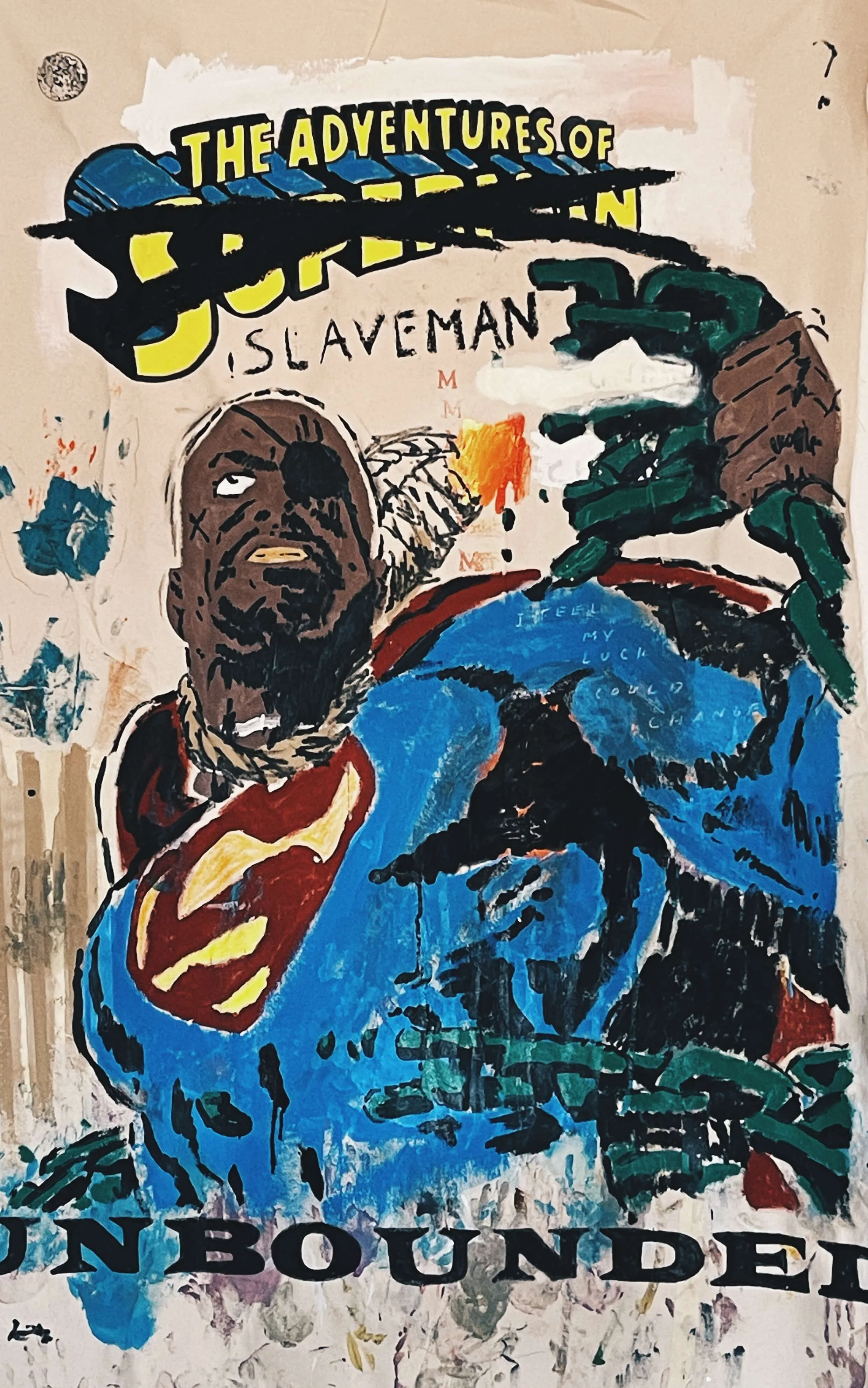
"Adventures of Slaveman. 2024”

Yet there’s no sanctimony in Brxwn’s stance, no trace of the ascetic martyr. He’s as likely to be found sketching in an Austin taqueria, trading quips with strangers, as he is to be pondering the metaphysics of line in his studio. His work draws heavily on the city’s eclectic energy—its street art, its music scene, its blend of grit and idealism—infusing his paintings with a warmth that tempers their cerebral edge. He’s a magpie of pop culture, plucking references from vintage album covers, comic book panels, and the glitchy aesthetics of early internet memes, then reweaving them into something that feels both nostalgic and prophetic. A Brxwn painting might remind you of the first time you saw a Keith Haring mural or the last time you scrolled through a feed at 2 a.m., yet it never feels derivative. It’s as if he’s distilled the noise of the world into a single, resonant note.

The art world, of course, is not immune to the irony of Brxwn’s inaccessibility. Collectors whisper about him in the hushed tones reserved for urban legends, trading rumors of who might have snagged one of his works at a recent auction or through a stroke of personal luck. Gallerists, ever hopeful, float proposals for shows that might coax him into the market, only to be met with a polite but firm demurral. Critics, meanwhile, grapple with how to evaluate an artist whose output resists traditional metrics of success. Is Brxwn a visionary or a provocateur? A saint or a strategist? The truth, as always, lies in the work itself—paintings that demand to be experienced, not owned, and that linger in the mind like a melody you can’t quite place.

For now, Brxwn remains in Austin, painting with the same restless curiosity that has defined his career. His studio, by all accounts, is a chaos of half-finished canvases, vinyl records, and dog-eared books on everything from Buddhist philosophy to streetwear history. He’s at work on a new series, though he’s characteristically coy about its details, hinting only that it involves “lines that move like water.” Whether these paintings will end up in a charity auction, a friend’s living room, or some other unexpected corner of the world is anyone’s guess. What’s certain is that they’ll carry the same alchemy that defines all of Brxwn’s work: a blend of heart, hustle, and a stubborn belief that art can still change the rules of the game.

As I write this, I can’t help but imagine stumbling across a Brxwn painting someday, perhaps in a community center or on the wall of a friend who earned his trust over late-night tacos. It would be a moment of recognition, a reminder that the best art isn’t the kind you buy but the kind that finds you. In a world obsessed with possession, Russell Brxwn is painting a different kind of legacy one line, one gift, one cause at a time.


The CIA and Jackson Pollock: Unraveling the Artistic Conspiracy

In the realm of art history, some stories emerge that are as intriguing as they are controversial. One such tale revolves around the alleged conspiracy between the CIA and the renowned American artist Jackson Pollock. This unusual partnership, if true, raises questions about the intersection of art, espionage, and political intrigue during the Cold War era. In this blog post, we will explore the claims, evidence, and theories surrounding the CIA's connection to the abstract expressionist artist Jackson Pollock.

Before delving into the conspiracy, it's important to understand the artist at the center of the controversy: Jackson Pollock. Pollock was a prominent figure in the abstract expressionist movement, known for his revolutionary drip painting technique. His art challenged traditional boundaries and played a pivotal role in shaping the trajectory of modern art in the mid-20th century.

The Cold War was a period of ideological conflict between the United States and the Soviet Union, characterized by espionage, propaganda, and intense competition on various fronts. This context provides the backdrop for the alleged CIA-Pollock connection.

Some researchers claim that the CIA saw the power of abstract expressionism as a means of promoting American culture during the Cold War. Abstract art, with its ambiguity and lack of direct political messaging, was seen as a way to showcase American freedom and creativity in contrast to the perceived conformity of Soviet art.

In recent years, declassified documents have shed light on the CIA's involvement in promoting abstract expressionism. The CIA's Congress for Cultural Freedom, an organization created to counter communist influence in the arts, funded exhibitions of American abstract artists, including Pollock, in Europe. Some critics argue that these exhibitions served as a form of cultural propaganda.

The alleged CIA-Pollock connection has been met with skepticism by some art historians. They argue that the CIA's interest in abstract expressionism was part of a broader effort to promote American culture, and the connection between Pollock and espionage remains speculative at best.

Regardless of the conspiracy, Jackson Pollock's legacy in the art world remains intact. His influence on modern art and the development of abstract expressionism is undeniable, and his contributions continue to be celebrated worldwide.

The alleged conspiracy between the CIA and Jackson Pollock is a fascinating and controversial topic that blurs the lines between art, politics, and espionage. While some evidence suggests the CIA had an interest in promoting abstract expressionism during the Cold War, the true extent of their connection to Pollock remains a matter of debate. Whether or not there was a covert partnership, Jackson Pollock's impact on the art world remains undeniably profound, and his work continues to captivate and inspire artists and art enthusiasts to this day.

Unleash Your Creativity: Creating Art on a Budget

Art has the incredible power to nourish the soul, but you don't need a hefty budget to embark on your creative journey. Whether you're a seasoned artist looking for cost-effective options or a beginner eager to explore your artistic side, this guide will help you create art on a budget without compromising your passion or quality.

1. Embrace Minimalism in Your Art Supplies

When it comes to art supplies, less is often more. Invest in a few high-quality essentials rather than a plethora of mediocre materials. Consider these budget-friendly options:

  • Sketchbooks: Opt for unbranded sketchbooks or even repurpose old notebooks. They can be great for pencil sketches, ink drawings, and even light watercolor work.

  • Pencils: A basic set of graphite pencils can last a long time and offer a range of shades. You don't need the priciest brands to create stunning drawings.

  • Watercolors: Look for student-grade watercolor sets. They provide vibrant colors at a fraction of the cost of professional-grade paints.

  • Brushes: A few versatile brushes can cover a wide range of techniques. Buy brushes that can be used for both acrylics and watercolors.

  • Canvas: Instead of traditional stretched canvases, consider canvas boards or even wooden panels. They are more affordable and can provide a unique surface to work on.

2. DIY Art Supplies

Get creative with your art supplies by making your own. For instance:

  • Homemade Paint: Experiment with creating your own paint using common household items like coffee grounds, tea, or natural pigments from crushed flowers and plants.

  • Recycled Materials: Old magazines, newspapers, and cardboard can serve as excellent collage materials. Cut and arrange them to create unique mixed-media art.

  • Found Objects: Explore your surroundings for interesting textures and shapes. Collect leaves, twigs, and other natural items to use in your artwork.

3. Thrift Stores and Garage Sales

Don't underestimate the treasures you can find in thrift stores and garage sales. Here's what you might discover:

  • Art Supplies: People often donate unused or gently used art supplies, including brushes, paints, and even easels.

  • Frames: Find affordable frames for your finished pieces. You can often give them a fresh look with a coat of paint or some creative embellishments.

4. Digital Art and Free Software

If you have access to a computer or tablet, explore the world of digital art. There are free or low-cost software options like GIMP, Krita, and Inkscape that offer powerful creative tools. Additionally, you can find plenty of free tutorials and resources online to help you get started.

5. Art Community and Skill Sharing

Engage with your local art community or online forums. Many artists are eager to share tips, techniques, and even swap or donate supplies. Attend local art events, workshops, or join social media groups dedicated to art on a budget.

6. Experiment and Embrace Imperfections

Remember that art is about self-expression, exploration, and learning. Embrace imperfections, and don't be afraid to make mistakes. Sometimes, the most remarkable pieces of art come from unexpected outcomes and experimentation.

Creating art on a budget is not only feasible but also incredibly rewarding. It forces you to think outside the box, nurture your resourcefulness, and appreciate the beauty in simplicity. So, grab your affordable supplies, unleash your creativity, and let your artistic journey begin!

X

Exploring the Connection Between Psychedelics and Creativity

There has been a growing interest in the potential role of psychedelics in enhancing creativity. Psychedelics, which include drugs like LSD and psilocybin (also known as "magic mushrooms"), are known for their ability to produce altered states of consciousness and can have a profound impact on the way people think and perceive the world.

One of the key ways in which psychedelics may enhance creativity is by allowing people to access deeper levels of consciousness and connect with their unconscious mind. This can lead to a "breakthrough" of new ideas and insights that may not have been accessible in a normal state of consciousness.

Studies have also shown that psychedelics may help to reduce "cognitive rigidity," or the tendency to get stuck in familiar patterns of thought. This increased openness to new ideas and perspectives can be particularly beneficial for artists and creative professionals who may be seeking to break out of a creative rut or explore new directions in their work.

However, it's important to note that the use of psychedelics is not without risks. These drugs can produce powerful and sometimes unpredictable effects, and it's important to approach them with caution and respect. It's also worth noting that psychedelics are illegal in many countries, and possession or use of these drugs can carry serious legal consequences.

Overall, the connection between psychedelics and creativity is an area that warrants further exploration and research. While the potential benefits of these drugs may be tempting, it's crucial to carefully consider the risks and make an informed decision before experimenting with psychedelics.

X

The Rise of AI Art: How Artificial Intelligence is Changing the Art World

In recent years, the art world has seen the emergence of a new type of artist: artificial intelligence. Using machine learning algorithms, AI systems are able to create unique pieces of art that challenge traditional notions of what it means to be "creative."

One of the most notable examples of AI art is the work of the artist known as "AI Portrait." This AI system, developed by a team of researchers at Rutgers University, creates portraits by analyzing a database of human faces and combining them to create a new, synthetic face. The resulting portraits have been exhibited at galleries around the world and have even sold for tens of thousands of dollars.

But AI art is not limited to visual media. AI systems have also been used to create music, poetry, and even architecture. In 2019, an AI system developed by OpenAI generated a short story that was selected for inclusion in an anthology of science fiction and fantasy.

The rise of AI art has sparked a debate within the art world about what it means to be a "real" artist. Some argue that AI systems are simply tools, and that the human creators behind them should be credited as the true artists. Others believe that AI systems are capable of true creativity, and should be recognized as artists in their own right.

Regardless of where one falls in this debate, it is clear that AI is having a significant impact on the art world. As AI technology continues to evolve, it will be interesting to see how it shapes the way we think about art and creativity.

X